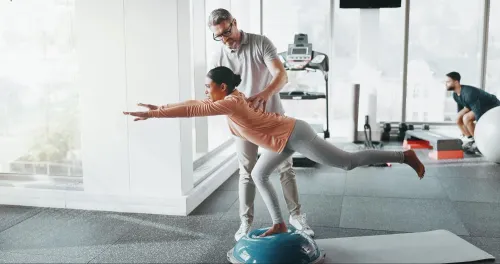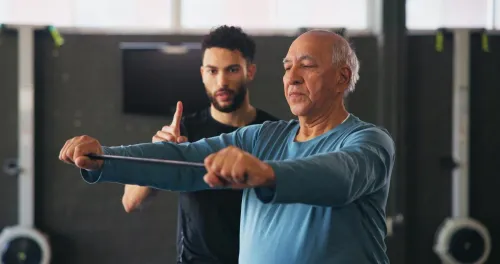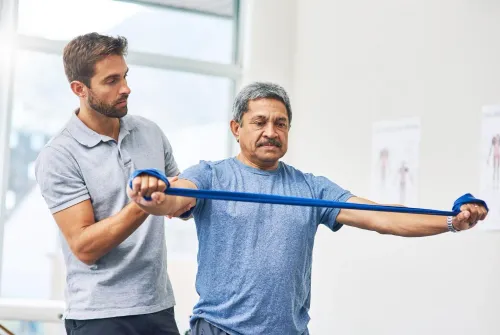
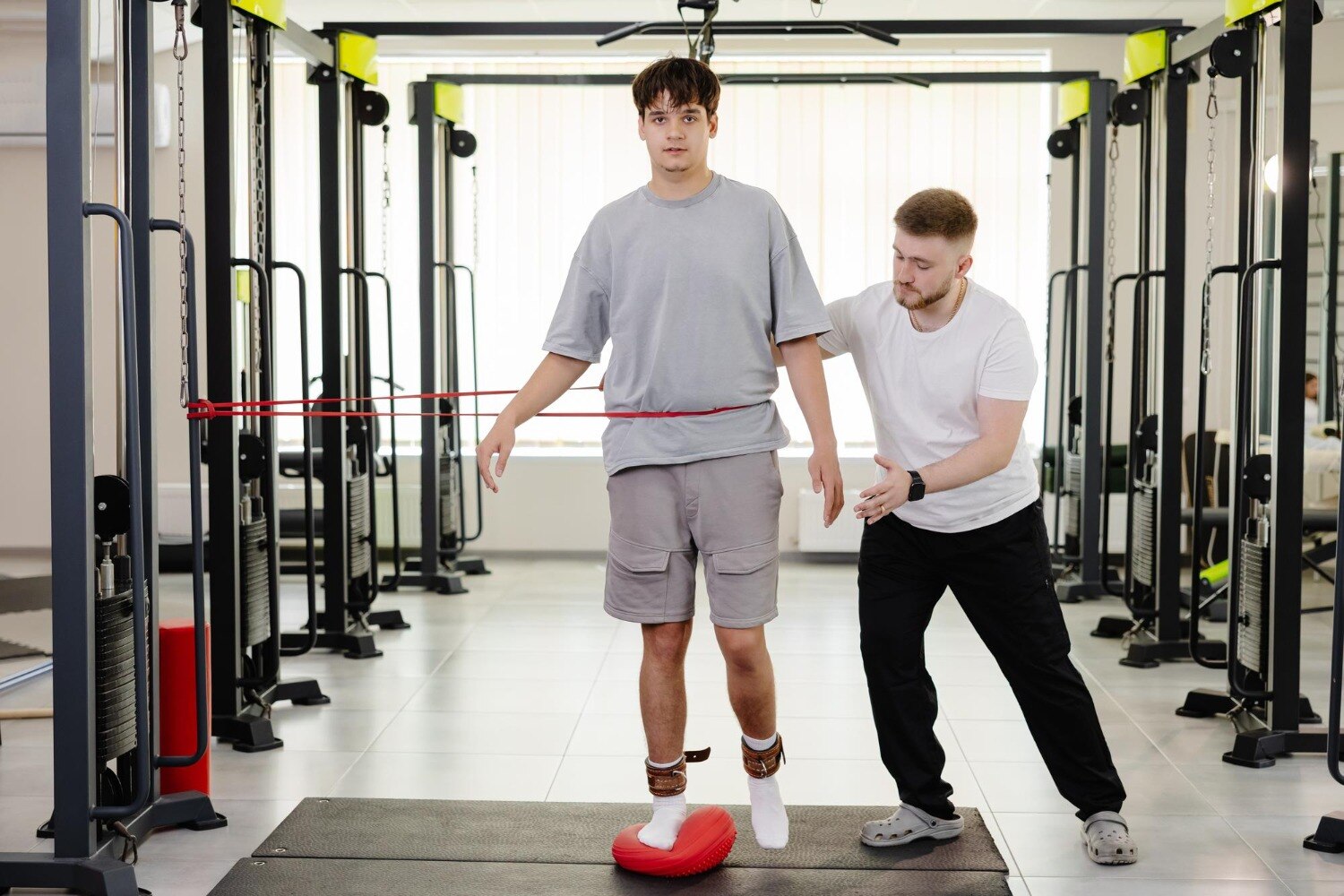
A walking programme should begin by identifying why walking feels unsafe, slow, tiring or difficult—not by assigning everyone the same exercises. You will be able to recognise the assessment, practice tasks, safety measures and progress checks that a useful gait programme should include, then ask better questions before choosing a clinic.
Key takeaways
- Expect checks of gait, balance, strength, sensation, vision, pain and endurance.
- Exercises can include stepping, turning, sit-to-stand practice and uneven-surface walking.
- Real-world tasks build safer walking for stairs, curbs, crowded spaces and daily routines.
- Ask how progress, supervision, equipment and fall safety will be managed.
What happens in a balance-and-gait assessment?
A physiotherapist starts by watching how you move, not by handing you a standard walking programme. The assessment establishes a safe starting point and identifies whether the main problem is gait, balance, strength, sensation, vision, pain or endurance.
1. You walk at your usual pace, turn, stop, change direction and manage an uneven surface. The physiotherapist may observe step length, walking speed, foot clearance, posture, stair ability, sit-to-stand transfers, single-leg stance and tandem stance. They also check how you use a cane, walker or other aid.
2. You may complete the Timed Up and Go test for rising, walking and turning; the 10-Metre Walk Test for walking speed; and the 6-Minute Walk Test for endurance. These tests answer different questions, so one result cannot describe your whole balance ability.
3. The clinician reviews leg strength, joint range, sensation, vision, pain, footwear and fall history before choosing exercises. Close guarding, stable hand support, a gait belt when appropriate and a correctly adjusted walking aid reduce risk during difficult tasks.
This is what balance fitness gait training includes in Vadodara: measured walking and balance findings before progression. Ask for balance gait training details, including which outcome measures will be recorded and how the plan changes when weakness, dizziness, sensory loss or fatigue limits safe practice.
Fitness walking may build endurance later; it does not replace correcting foot clearance, turning or step symmetry.
Which exercises and walking tasks are included?
A balance exercise challenges your ability to control your body, while gait training improves how you move from one place to another. Balance work may include narrow stance, tandem stance, weight shifting, reaching, multidirectional stepping and turning. Gait work addresses step length, foot clearance, posture, walking speed, symmetry and safe use of a walking aid.
| Balance training | Gait training |
|---|---|
| Steady position or controlled movement | Forward, backward or sideways walking |
| Weight shifting and reaching | Starting, stopping and changing speed |
| Stepping in different directions | Turning and negotiating obstacles |
| Reducing hand support or changing the surface | Treadmill, uneven-ground, curb and stair practice |
| Goal: prevent loss of balance | Goal: move safely and efficiently |
Common gait therapy inclusions become useful when they resemble your daily routine rather than a drill performed in isolation. The therapist combines balance and gait practice through tasks such as:
- Rising from a chair, walking several metres, turning and sitting down
- Stepping over objects, clearing a doorway threshold or navigating furniture
- Walking to a simulated shop, using stairs or crossing an uneven surface
- Practising floor-to-stand transfers when getting up from the floor is a personal goal
The Timed Up and Go test examines mobility and turning; the 10-Metre Walk Test measures walking speed; and the 6-Minute Walk Test measures endurance. These tests guide exercise choices, but none replaces a complete balance assessment.
How does fitness walking rehabilitation build real-world ability?
Fitness walking rehabilitation in Vadodara builds real-world ability by increasing how long, how far and how confidently you can walk without excessive fatigue, pain or instability.
Repeated walking intervals, treadmill practice, cycling or another aerobic activity can improve endurance; they do not, by themselves, correct step asymmetry, poor foot clearance, posture or unsafe use of a walking aid.
Training difficulty rises in measured steps:
- Extend walking time or distance while keeping symptoms controlled.
- Increase pace only when foot placement and balance remain safe.
- Progress from smooth indoor surfaces to turns, slopes, uneven ground and community walking.
- Add conversation, carrying an object or responding to a cue after basic walking is reliable.
- Practise a recreational target, such as a park walk, shopping trip or return to a preferred sport.
A physiotherapist can track walking speed, distance, turning, stair performance, confidence and near-falls at review points. A slower pace with better stability is useful progress, even before speed increases. Conversely, a faster walk that causes shuffling or repeated loss of balance is not fitness progress.
Gait correction remains a separate clinical goal: it addresses how you step and move safely. Fitness training develops the capacity to keep going. Combining both helps you transfer improved walking into outdoor and recreational activities without treating exhaustion as a technique problem.
Who is suitable, and how is gait training made safe?
People recovering from stroke, Parkinson’s disease, vestibular problems, lower-limb injury, prolonged bed rest, deconditioning or recurrent falls may benefit. Suitability depends on walking ability, medical status, pain, strength, sensation, vision and fall risk—not the diagnosis alone.
A physiotherapist should screen you before challenging drills. The review may include walking speed, step length, foot clearance, turning, stairs, uneven surfaces, transfers, balance reactions, joint range, footwear and your history of falls. A balance training clinic in Vadodara should explain these checks and record outcome measures so progress is measurable.
Safe practice may include:
- Close guarding and a gait belt when appropriate, especially during turns, stairs or uneven-surface work
- Stable hand support, clear walking space and footwear that fits securely
- A correctly adjusted cane, walker or other walking aid; do not stop using it to “improve balance” without professional guidance
- Repeated walking, treadmill work or task practice matched to your ability, with rest before fatigue causes poor foot placement
- A graded home programme; do not practise difficult balance exercises alone before assessment
Stop the session and seek medical review for new chest pain, fainting, unexplained breathlessness, sudden neurological change, severe dizziness, acute joint injury or rapidly worsening weakness. These are not fitness problems to push through.
Ask for balance gait training details, including who supervises practice, how the plan changes for your diagnosis and which warning signs require referral.
What should you ask a Vadodara clinic before starting?
Ask whether a qualified physiotherapist will assess you before selecting exercises. The assessment should record walking speed, step length, foot clearance, turning, stairs, balance reactions, strength, joint range, sensation, vision, footwear and fall history. A generic walking programme cannot show which problem needs treatment.
Use this checklist when comparing a balance training clinic in Vadodara:
- Which measures will you repeat? The Timed Up and Go tests functional mobility and turning; the 10-Metre Walk Test measures walking speed; the 6-Minute Walk Test measures endurance.
- What are the gait therapy inclusions? Look for sit-to-stand, starting and stopping, speed changes, turning, obstacle or curb practice, stairs and walking-aid training—not only treadmill time.
- What home practice is safe, and who should supervise it? Ask whether the plan includes footwear checks, stable hand support, close guarding or a gait belt when appropriate.
- When will you review progress? Agree on changes such as distance, pace, stair performance, confidence or near-falls.
Ask Physiospace By Dr. Pratiksha how these choices would change for stroke, Parkinson’s disease, arthritis, vestibular problems, post-surgical recovery or deconditioning.
| Provider answer | What it demonstrates | Warning sign |
|---|---|---|
| Named outcome measures | Progress can be checked | “You will feel better” |
| Diagnosis-specific changes | Exercises match your condition | One routine for everyone |
| Equipment and supervision plan | Practice is safer | Challenging drills alone |
| Defined review point | Difficulty can be adjusted | No reassessment plan |
Related services
Neurological Rehabilitation Physiotherapy is a specialized rehabilitation service designed to improve walking ability, body balance, coordination, and mobility in individuals... View service → |
Geriatric Physiotherapy Physiotherapy Balance Training Physiotherapy is a specialized rehabilitation service that helps improve stability, coordination, posture, and body... View service → |
Frequently asked questions
What happens in a balance-and-gait assessment?
A physiotherapist observes your walking and checks balance, strength, sensation, vision, pain and endurance to set a safe starting point.
Which exercises and walking tasks are included?
Gait therapy can include stepping, turning, sit-to-stand practice, balance drills and walking tasks matched to your ability and goals.
How does fitness walking rehabilitation build real-world ability?
It progresses from controlled exercises to practical tasks such as stairs, curbs, changes of direction and walking in busy environments.
Who is suitable for gait training, and how is it made safe?
People with walking, balance, strength, pain or endurance limitations may benefit. The physiotherapist adjusts difficulty, provides supervision and uses support when needed.
What should you ask a Vadodara clinic before starting?
Ask what the assessment includes, which goals will be measured, how falls are prevented, what equipment is used and how the programme will progress.
Keywords